Investing Calculator

Compound Interest Calculator

Project long-term growth, compare contribution strategies, and understand how compounding accelerates wealth.

Category
Investing
Updated
2026-02-02

Interactive Preview

Compound Interest Calculator

Try a quick scenario: update the balance, rate, and timeline to see how your money compounds.

Projected result
$17,908
Estimated change
$7,908

What the compound interest calculator helps you do

FinWizard's compound interest calculator helps you model long-term investment growth with clarity and confidence. Use it to test different scenarios, compare outcomes, and make smarter financial decisions without the guesswork. Instead of relying on rough estimates, you get a structured framework for understanding how each input changes the final result.

Because the calculator is built for real-world planning, it emphasizes practical insights: how much you need today, what changes matter most, and which inputs drive the biggest improvements. It’s designed to keep you focused on the levers you can control, so you don’t waste time on assumptions you can’t influence.

Whether you're planning for a near-term goal or a long-range milestone, this calculator gives you a realistic baseline so you can act quickly and avoid costly surprises. It’s a planning companion that turns vague ideas into measurable steps, helping you decide where to focus effort right now.

Tip

Scenario tip

Run compound interest calculator with conservative inputs first, then increase assumptions to see what’s possible.

How to use this calculator

Start by entering your key inputs. Keep your assumptions realistic, then adjust variables one at a time to see how the results change. This approach helps you understand cause and effect instead of guessing which number matters most.

FinWizard highlights the most important outputs so you can focus on the next actionable step, whether that's saving more, refinancing, or updating your monthly budget. Use the output to decide on one change you can make this month.

Save at least two scenarios: a conservative baseline and a stretch goal. Comparing them side-by-side helps you decide which inputs are worth adjusting and which tradeoffs feel sustainable. Most users revisit their scenarios quarterly to keep assumptions current.

Planning benchmarks

Review cadence
Quarterly
Update assumptions as rates and goals change.
Scenarios
Baseline + stretch
Compare realistic and optimistic outcomes.
Primary focus
long-term investment growth
Use this to prioritize the most impactful inputs.

Inputs you should gather first

Before you rely on the output, take a moment to gather realistic inputs. Pull recent statements or quotes so you are not guessing with outdated numbers, and use the most recent rates available.

If a value is uncertain (like a future interest rate or return), create a range. Run one conservative scenario and one optimistic scenario to see how much the outcome changes, then choose the middle as your planning default.

The better your inputs, the more confident your plan will be. Small improvements in input accuracy often matter more than complex formulas, and they help you spot unrealistic expectations early. When in doubt, round down returns and round up costs.

When this calculator helps most

Best for
  • Comparing multiple scenarios quickly.
  • Highlighting the inputs that move the result the most.
  • Creating a clear next step for planning.
Watch out for
  • Outputs are only as accurate as your assumptions.
  • One-time snapshots can miss long-term trends.
  • Major decisions still benefit from expert review.

How to interpret the results

The output is a directional guide, not a promise. Use it to understand how your choices affect the end result and which variables create the largest swings. Your job is to translate that information into a plan you can execute.

If the result feels too aggressive, adjust one input at a time and look for a more realistic balance between ambition and sustainability. You’ll often find that small changes across multiple inputs are more achievable than one large change.

If the output is lower than expected, focus on the inputs you can control most—monthly contributions, term length, or cost reductions—before worrying about less predictable factors like future market returns. The goal is progress you can repeat, not perfection.

Insight
A strong plan starts with realistic inputs and simple comparisons you can repeat.

A scenario walkthrough

Start with a baseline scenario that reflects your current reality. This is your truth snapshot—what happens if you change nothing for the next year.

Next, create a growth scenario. Increase the inputs you can control (like monthly savings or down payment) and compare the difference, then ask yourself if that change is actually sustainable.

Finally, create a stress-test scenario. Reduce the return rate or raise the expense estimate to see how resilient your plan is if conditions change.

Before you commit

0/3 completed · 0%

Why this calculator matters

Planning long-term investment growth without a calculator often leads to overconfidence or unnecessary fear. The compound interest calculator gives you a reality check so you can make decisions grounded in data instead of guesses.

We built these pages by observing how users actually plan: they want simple inputs, fast comparisons, and a clear next step. This structure keeps the experience focused and actionable.

When you use the calculator consistently, you build a feedback loop that makes planning easier every month. You learn which inputs matter most and where small changes create big results.

Key metrics to monitor

Every calculator highlights a few metrics that should guide your next action. These outputs are the ones most tied to real-world decisions, so prioritize them in your review.

Track how the key outputs change over time rather than obsessing over one snapshot. If the trend improves, your plan is working even if the number isn’t perfect yet.

If you’re unsure which metric matters most, use the calculator to run two scenarios and compare the outputs that shift the most. Those are usually the inputs worth focusing on.

Next steps after you run the numbers

Turn the output into one concrete action. That could be increasing your monthly contribution, reducing a cost, or setting a new savings milestone.

Save the scenario so you can revisit it later. Tracking how your numbers evolve over time helps you stay consistent and avoid reactive decisions.

If you want deeper insight, open the related guides and articles linked on this page—they provide context, best practices, and real-world examples.

Common mistakes to avoid

Avoid overly optimistic assumptions. Plans fail more often because inputs were too aggressive than because the math was wrong, so lean conservative by default.

Don't ignore secondary costs. Taxes, fees, and insurance can materially change outcomes—include them whenever the calculator allows so you don’t under-budget.

Resist the urge to change everything at once. Adjust one variable at a time so you can clearly see cause and effect and measure what actually worked.

Key takeaways you can act on

Use the takeaways below as a checklist for your next financial decision.

Understand how time and rate changes affect your final balance.

See how monthly contributions compound into a larger future value.

Plan realistic milestones for savings goals or retirement targets.

Once you have a plan, set a reminder to review it quarterly so you stay aligned with your goals and adjust for real-life changes.

Go deeper with FinWizard Pro

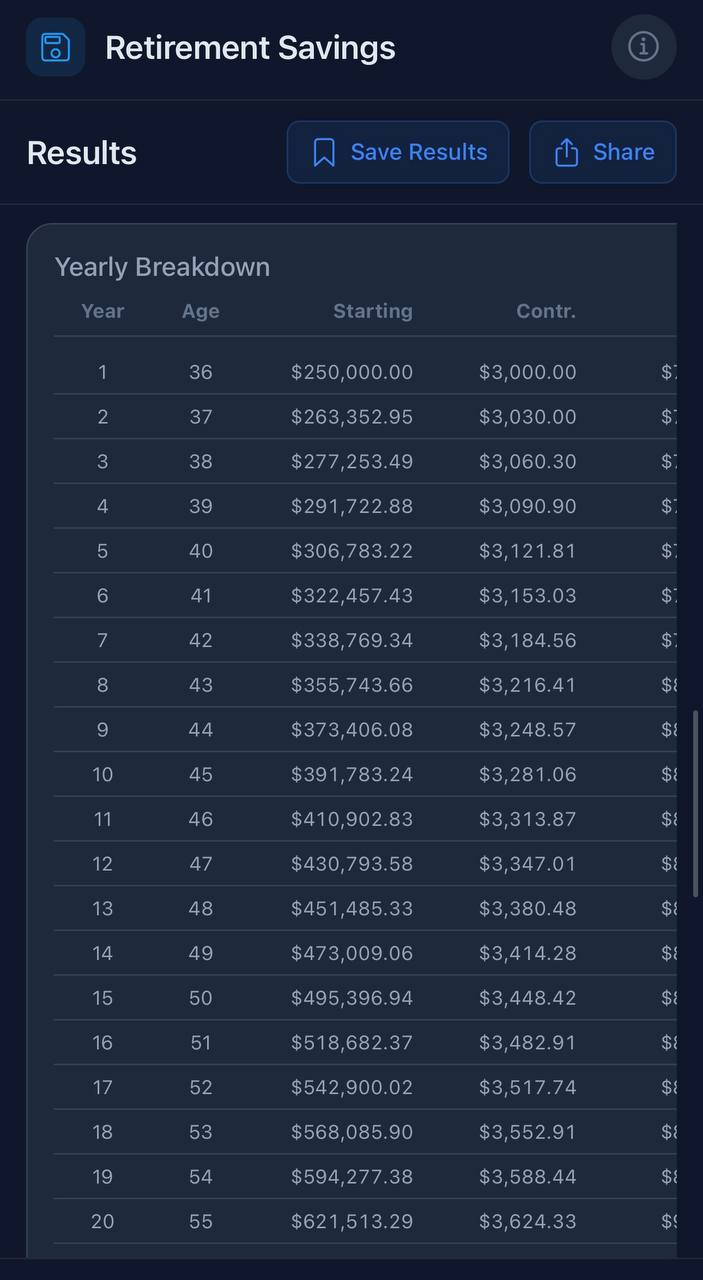
Unlock 40+ calculators, detailed tables, professional exports, and advanced analysis tools inside the FinWizard iOS app.

Run unlimited scenarios, save your work, and keep everything organized across all your financial goals.

If you want deeper analytics, historical tracking, and export-ready insights, FinWizard Pro is built for serious financial planning.

Unlock full access

Run deeper scenarios in FinWizard

Access 40+ calculators, save your scenarios, and export detailed reports in the FinWizard iOS app.

Quick roadmap

1

Enter your baseline inputs for compound interest calculator and capture the first result.

2

Adjust the variables that impact long-term investment growth most and compare the difference.

3

Save a conservative and stretch scenario to guide your next decision.

Key takeaways

  • Understand how time and rate changes affect your final balance.
  • See how monthly contributions compound into a larger future value.
  • Plan realistic milestones for savings goals or retirement targets.

Frequently asked questions

What is compound interest?
Compound interest means you earn interest on both your original principal and the interest you’ve already earned. Over time, this accelerates growth compared to simple interest because the base keeps expanding. In practice, this is why long-term investors emphasize time in the market: the compounding effect grows larger every year. Use the compound interest calculator to visualize how small contributions become meaningful when you give them enough time to multiply.
How often should I contribute?
Consistent monthly contributions create the most reliable growth because they keep the compounding engine running. Even small deposits become meaningful when they have years to grow, and regular contributions reduce the need to time the market. If you’re unsure about the right amount, start with something sustainable and increase it as your income rises. The calculator makes it easy to see how a small monthly increase changes your long-term outcome.
Are FinWizard calculator results accurate?
FinWizard calculators use industry-standard formulas that match common financial planning references. Every calculator is checked against benchmark scenarios so the numbers line up with real-world expectations, and we calibrate inputs to typical industry ranges so you can spot unrealistic assumptions quickly. The output is still a projection based on the inputs you choose, so think of it as a planning guide rather than a guarantee. For major decisions—like buying a home, changing investment allocations, or planning retirement—validate your plan with a qualified professional who can account for taxes, fees, and personal circumstances.
Can I save or export my calculations?
Yes. The FinWizard iOS app lets you save calculations, export PDF summaries, and share results with a partner or advisor. If you use FinWizard Pro, you also get watermark-free exports and CSV/Excel downloads for deeper analysis and modeling. Saving scenarios is especially helpful when you want to compare multiple inputs side-by-side, track changes across months, or keep a history of decisions you’ve already modeled. In practice, most people save a baseline scenario and one or two alternatives, then revisit the math each quarter.
Is my data stored online?
No. Calculations run locally on your device, and saved results stay encrypted on your phone for maximum privacy. FinWizard does not store your financial inputs on external servers. This means your data stays under your control, and you can delete it at any time directly from the app. If you share a report, only the exported file is shared—your underlying calculations remain private on your device.

Related resources

Understanding Compound Interest
Investing

Understanding Compound Interest

A practical guide to compounding that shows how time, rate, and contributions turn small deposits into long-term growth.
compound interest calculatorinvestinglong-term growth
Open guide
Building Net Worth Over Time
Personal Finance

Building Net Worth Over Time

A clear roadmap for growing net worth by balancing debt payoff, savings, and investing.

how to build net worthnet worth calculatorpersonal finance
Open article

Ready to take control?

Join thousands of users who trust FinWizard for their daily financial calculations.